Personalized Medical Care & Dedicated International Patient Concierge

Press Release
Overcoming the Disadvantages of Conventional Dentures: About Implant Dentures
Discover how implant-supported dentures overcome loose-fitting conventional dentures with stronger retention, fewer implants needed, and 8–10 year durability. Learn more today.
Schedule a Consultation
As dental prosthetics using implants have become commonplace, interest in and demand for implant-supported dentures have been continuously increasing. From a dental perspective, following 20 years of initial experimental implant treatment, various studies and case studies have been verified, resulting in the accumulation of substantial data regarding treatment methods and long-term prognosis. So, what exactly is an implant-supported denture?
Although prosthetic treatment in the form of 'dentures' has a long history spanning centuries, it has always been considered a challenging procedure due to variations in the individual patient's oral condition, the practitioner's skill level, and the patient's overall health. Fundamentally, the reason dentures are uncomfortable is that they constantly move within the mouth. Implant-supported dentures originated from dentists' concern over whether it was possible to fix dentures in place so they would not move inside the mouth, and have evolved into a system where dentures are anchored to implants.
General dentures are a form of prosthesis that restores areas of lost teeth with removable prosthetics. Functional retention and support are obtained from the remaining teeth or gum tissue.
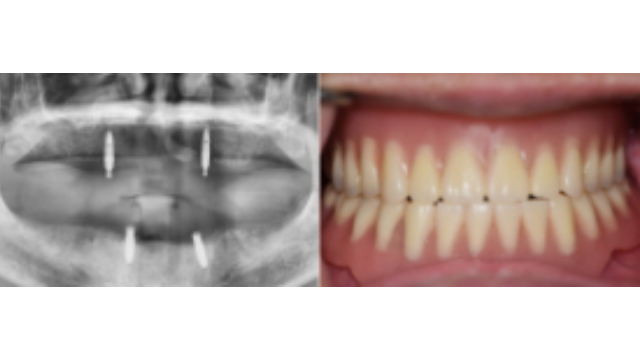
Implant-supported dentures are a type of removable prosthesis, but they obtain functional retention and support from a small number of implants. Typically, when getting implant-supported dentures, about 2 to 4 implants are planned, and the shape of the denture is designed differently according to the individual patient's characteristics.
Dr. Park Hyo-jin (Specialist in Conservative Dentistry) of Magok Pureunmaeum Dental Clinic in Gangseo-gu explained, “The advantages of implant dentures include their stronger retention than conventional dentures, which prevents them from falling out easily; their excellent cost-effectiveness as they allow for a reduction in the number of implants required; and the fact that they are feasible even in cases where the alveolar bone (gum bone) is poor. The reason implant dentures are functionally superior to conventional dentures is that a robust retention device attached to the top of the implants functions effectively. This retention device, which acts like a snap button, prevents the dentures from moving or falling out in the mouth and also plays a role in partially supporting the chewing force.”
Furthermore, the lifespan of implant-supported dentures is typically 8 to 10 years if regular checkups are accurately performed about twice a year. In cases where severe wear occurs due to long-term use, the implanted sites can be left intact while only the denture is newly fabricated, offering even greater convenience.