Personalized Medical Care & Dedicated International Patient Concierge


Medical Guide
Wisdom Tooth Extraction in Korea: Your Recovery Timeline
After wisdom tooth extraction in Korea, pain and swelling ease after one to two days, soft tissue closes over one to two weeks, and bone heals for weeks.
Schedule a ConsultationWisdom Tooth Extraction in Korea: Recovery Timeline and What to Expect
Medically reviewed by Dr. Park Kyung Ran, Specialist in Oral and Maxillofacial Surgery
Recovery from wisdom tooth extraction in Korea follows the same biological schedule it follows anywhere: the worst of the pain and swelling comes in the first two or three days, the gum closes over roughly one to two weeks, and the bone underneath keeps remodeling for weeks after that. The surgery itself is short. The part that needs planning is the fortnight afterward — especially if it includes a long-haul flight home.
Magok Pureunmaeum Dental Clinic in Gangseo-gu, Seoul, describes the procedure as removing a wisdom tooth that is impacted, painful, infected, decayed, or causing problems for nearby teeth or gums. Its approved general statement is deliberately unglamorous: wisdom tooth extraction is a common oral and maxillofacial procedure used to manage problematic, diseased or impacted third molars. The clinic's oral and maxillofacial surgery specialist, Dr. Park Kyung Ran, lists wisdom tooth extraction among her core clinical areas.
Why Wisdom Teeth Get Removed, and When They Are Left Alone
Extraction is indicated when a wisdom tooth is causing or is likely to cause disease — not simply because it exists. The American Dental Association's MouthHealthy resource explains the underlying problem: wisdom teeth cause trouble when there is not enough space for them to surface or they come through in the wrong position, and "impacted" means the tooth is trapped in your jaw or under your gums. The UK's NHS lists what that can produce:
- Pain and swelling
- Infection in the gum around the tooth, called pericoronitis
- Food getting stuck in the area
- Tooth decay
- Gum disease
- A build-up of fluid around the tooth, known as a cyst
- A dental abscess
Magok Pureunmaeum Dental Clinic's own list overlaps closely: impacted or painful wisdom teeth, recurrent infection, decay, gum problems, or difficulty keeping the area clean.
The reverse case matters just as much, and it fits the clinic's stated philosophy of preserving natural teeth as much as possible. The clinic notes that patients may not need extraction when wisdom teeth are healthy, functional and can be maintained safely, and that monitoring may be appropriate for wisdom teeth not causing problems. A 2020 Cochrane systematic review of removal versus retention for asymptomatic, disease-free impacted wisdom teeth found insufficient evidence to support either course, with only very low-certainty evidence hinting that retention may raise the long-term risk of periodontitis around the adjacent second molar. Cochrane's practical advice is shared decision-making, plus regular review if the teeth are kept — and the ADA likewise says wisdom teeth left in place should keep being monitored.
For a patient flying in from the United States, that is the first thing worth asking — whether every wisdom tooth in the plan needs to come out on this trip.
What the Consultation and Imaging Are Looking For
The consultation is an assessment of surgical difficulty, and difficulty is what drives your recovery timeline. Magok Pureunmaeum Dental Clinic describes the sequence as reviewing medical and dental history, examining the mouth, and using imaging where needed to assess the tooth's position, its roots and the surrounding structures before deciding whether extraction is appropriate at all. Its broader oral and maxillofacial workflow adds an assessment of teeth, nerves and bone, an evaluation of surgical difficulty, and a discussion of alternatives and anesthesia before a plan is written.
Cone beam computed tomography (CBCT) is a scan that captures the jaw in three dimensions rather than as a flat image, and the clinic is publicly listed as having one CBCT unit on site, alongside 3D CT imaging and a digital diagnostic system. For wisdom teeth, the clinic notes that dental X-rays and, when clinically appropriate, 3D imaging help evaluate impacted teeth and their relationship to nearby nerves and other structures.
That relationship is the crux of it. A lower wisdom tooth sits near the inferior alveolar nerve, which supplies feeling to the lower lip and chin; an upper one sits near the maxillary sinus. Imaging is how a surgeon judges whether the roots are wrapped around a nerve, whether the tooth must be sectioned into pieces, and how much bone has to be removed — the variables that separate a five-minute extraction from a forty-minute one, and a three-day recovery from a two-week one.
What Happens on the Day of Surgery
The procedure is usually short and usually done under local anesthetic. Magok Pureunmaeum Dental Clinic describes the steps as anesthesia, exposing the tooth where necessary, removing surrounding gum or bone if required, extracting the tooth, cleaning the area, and placing sutures when indicated. Depending on complexity and the patient's needs, sedation or general anesthesia may also be considered.
The NHS adds detail from the patient's side: the socket is widened, and the tooth comes out either whole or cut into two or three pieces, with dissolvable stitches if needed. Its timing benchmark is useful for planning — the procedure often takes just a few minutes and should take no more than about 40 minutes — and patients normally go home the same day.
Duration varies for reasons you cannot control: the clinic attributes procedure time to the tooth's position, root shape, surrounding bone and the patient's general health. If your plan involves multiple teeth, ask whether they are being done in one sitting or staged.
The Recovery Timeline, Stage by Stage
Recovery runs in overlapping stages, and the visible part finishes long before the structural part. Magok Pureunmaeum Dental Clinic's timeline is that pain and swelling are common for the first few days and usually improve progressively, initial soft-tissue healing occurs over about one to two weeks, and deeper healing continues for several more weeks. The result for the removed tooth itself is permanent. Set against published patient guidance, the stages look like this:
- Day 0, the first 24 hours. A blood clot forms over the socket, and the NHS notes this clot is what helps the wound heal. Some bleeding and the taste of blood are normal. The American Association of Oral and Maxillofacial Surgeons adds that anesthesia can leave mild dizziness, nausea or shivering.
- Days 1 to 3, the peak. Swelling and jaw soreness are usually at their worst here. The NHS says pain and swelling should start to improve after one or two days, and that bruising may appear on the cheek.
- Days 3 to 7. Chewing and swallowing gradually become comfortable again. The NHS notes you can usually resume normal activities the day after surgery, though a difficult removal or a general anesthetic may mean one to three days off work.
- Weeks 1 to 2. Soreness fades and dissolvable stitches disappear on their own. The NHS frames the whole symptomatic period as up to two weeks: pain, swelling, possible bruising, a sore and stiff jaw, uncomfortable chewing.
- Weeks 2 to 6. The socket keeps filling in. AAOMS notes it can take up to about six weeks to heal fully, and that soft tissue can stay very sensitive for several weeks.
Two caveats belong with any timeline. Complex impacted-tooth surgery takes longer to recover from than an uncomplicated extraction, as the clinic states directly. And healing varies with anatomy, age and general health, so these ranges are planning tools rather than promises.
Aftercare: Protecting the Clot Is the Whole Job
Almost every aftercare instruction exists to keep the blood clot in place. Magok Pureunmaeum Dental Clinic's protocol is to rest after surgery, follow medication instructions, use cold compresses as directed, eat soft foods, avoid smoking and straws, maintain careful oral hygiene, and attend follow-up appointments when advised. Its general surgical guidance adds that smoking should be avoided because it can interfere with healing and increase complications. AAOMS gives the reasoning behind each rule, which makes the rules easier to follow:
- Avoid straws for the first 24 to 48 hours, because the sucking action can pull the clot out.
- Do not brush around the extraction site for at least 24 hours, and avoid vigorous rinsing.
- Use a manual toothbrush rather than an electric one, which can be harsh on healing gums.
- Skip over-the-counter mouthwash unless an antibacterial rinse has been prescribed.
- Avoid small, hard foods such as nuts, seeds and granola, which irritate the site and lodge in it.
- Do not smoke, and stop before the extraction rather than after it.
The NHS adds paracetamol or ibuprofen for pain, gentle rinsing with warm salt water, and firm pressure with clean cotton wool for at least 10 minutes if bleeding starts. It also advises avoiding alcohol and very hot drinks, and not driving for 48 hours after a general anesthetic or 24 hours after a sedative injection.
Timing Your Flight Home
This is the question a local patient never has to ask, and the honest answer is that it belongs to your surgeon rather than to a chart. Magok Pureunmaeum Dental Clinic has not published a specific post-extraction flying interval for wisdom teeth; its position on travel timing after dental treatment is that patients should confirm it with the treating dentist based on the treatment performed and their recovery. Ask for that clearance explicitly, in writing if you can, before you change a ticket.
What the clinic does state is that wisdom tooth extraction is usually an outpatient procedure, so an extended stay in Korea is generally not required. It qualifies that in a way worth reading twice: international patients should allow enough time for the dentist to assess healing when the extraction is complex or when multiple teeth are removed. The buffer you need is a function of surgical difficulty, not of the calendar.
Two general considerations shape the conversation. The CDC's Yellow Book notes that commercial aircraft cabins are typically pressurized to the equivalent of 6,000 to 8,000 feet of altitude, and that travelers who have had recent surgery should consult their physician before flying. Separately, the clinic's risk list includes sinus complications with some upper teeth — a reason your surgeon may treat an upper molar differently from a lower one when advising on air travel.
Practical points that make an early flight easier, whenever it is cleared:
- Schedule surgery early enough in the trip that your first post-operative check happens before you leave.
- Ask whether sutures are dissolvable, so stitch removal is not an extra appointment tying you to Seoul.
- Carry soft food, water and any prescribed medication in your hand luggage.
- Confirm what to do about bleeding in flight, and what counts as too much.
If Something Goes Wrong After You Land
Know the red flags before you fly, because the most common complication tends to arrive on a delay. Dry socket — alveolar osteitis — happens when the clot is dislodged or breaks down, exposing bone and nerves. AAOMS describes its hallmark as severe pain within a few days after extraction, often radiating toward the eye, ear, neck or temple, sometimes with visible bone in the socket and a foul taste or smell. That "few days" window can coincide exactly with a flight home.
The NHS lists the symptoms that warrant urgent dental attention rather than waiting: bleeding that does not stop, severe or worsening pain and swelling that painkillers are not helping, and pain with a bad taste in the mouth, a high temperature, or feeling unwell. The clinic's instruction is the same in substance — make contact for significant bleeding, worsening pain or swelling, fever or other concerning symptoms.
Follow-up after patients return home is one of the concerns the clinic lists as typical for US patients, alongside credentials, English communication, safety and cost transparency. It states that translated documents are available and that multilingual support covers its patient services, with interpreter arrangements determined after consultation. Aftercare and emergency support arrangements for this market are not detailed publicly, so pin them down at consultation rather than assuming.
The CDC's guidance for people receiving care abroad applies directly. Dental care is the most common form of medical tourism among US residents, and the CDC recommends checking the clinician's qualifications and the facility's credentials beforehand, agreeing in advance who manages any complications, and taking copies of your medical records with you.
Risks, and How Often They Actually Occur
Most people heal without a significant complication, and the specific risks are known and quantified. Magok Pureunmaeum Dental Clinic lists pain, swelling and some bleeding as common short-term effects, with dry socket, infection, nerve injury, sinus complications with some upper teeth, and rarely jaw fracture or damage to nearby teeth as possible complications. Bruising, jaw stiffness and temporary difficulty chewing or swallowing also appear on its list of common effects.
On nerve injury, published figures give useful proportion. A literature review in the Journal of Oral & Maxillofacial Research covering studies from 2009 to 2014 put the incidence of inferior alveolar nerve injury after lower third molar extraction at about 0.35% to 8.4%, and reported that recovery is the usual course while permanent injury is very rare. The same review identified patients over 24, horizontal impactions, and extraction by trainee surgeons as factors associated with higher risk. The NHS describes such an injury as numbness or tingling in the tongue, lips and chin, which usually gets better but can last weeks or months.
The clinic's stated approach to reducing risk is procedural rather than promotional: clinical examination, appropriate imaging, assessment of the tooth's position and nearby structures, anesthesia planning, careful extraction, postoperative instructions, and follow-up when required. It notes that surgery may need to be postponed or modified for patients with uncontrolled systemic disease, significant bleeding risk, certain medications, active infection, or unacceptable anesthesia risk. One point of transparency from its own documentation: detailed sterilization and infection-control protocols are not publicly verified, which makes them a fair question to raise directly.
Who Would Perform the Surgery
Surgical extraction of impacted third molars sits with the clinic's oral and maxillofacial surgery specialist. Magok Pureunmaeum Dental Clinic describes Dr. Park Kyung Ran as a Specialist in Oral and Maxillofacial Surgery and a licensed dentist in South Korea, recorded as a Fellow, board-certified in Oral and Maxillofacial Surgery. That is a Korean specialist credential and should be read as such — it is not the same thing as certification by a United States specialty board. Dr. Park graduated from Yonsei University College of Dentistry. She completed her internship and residency in the Department of Oral and Maxillofacial Surgery at Yonsei University Dental Hospital, followed by Master's and Doctoral programs in the same field. She is a Senior Board-Certified Member of the Korean Association of Maxillofacial Plastic and Reconstructive Surgeons, and her listed clinical focus includes wisdom tooth extraction alongside minor oral surgery.
The clinic's other named dentist, Director Dr. Park Hyo Jin, is a Specialist in Conservative Dentistry with over 22 years of clinical experience whose documented emphasis is preserving natural teeth. That division matters when your question is whether a tooth needs removing at all. More on both is on the clinic's about page, and patient feedback is on its reviews page.
On the regulatory side, the clinic is a Registered Medical Institution for Attracting Foreign Patients, certified by Korea's Ministry of Health and Welfare in compliance with the Medical Overseas Expansion and Foreign Patients Attraction Act. That is a registration authorizing the treatment of international patients under Korean law. It is not a clinical quality accreditation and should not be read as one.
Logistics, and the Cost Questions to Ask Instead
Getting there is straightforward, and the cost conversation has to happen in person. US patients typically fly into Incheon (ICN) or Gimpo (GMP). Magok Pureunmaeum Dental Clinic is on the 3rd floor of Woosung SB Tower at 385 Gangseo-ro, Gangseo-gu, Seoul 07586, about 50 meters from Exit 2 of Balsan Station on Seoul Metro Line 5. Consultation hours are Monday and Wednesday through Friday, 9:30 to 18:30 KST; Tuesday, 9:30 to 20:30; and Saturday, 9:30 to 14:00 with no lunch break. It is closed on Sundays and public holidays — worth noting when budgeting days for a post-operative check. US passport holders can generally enter Korea visa-free for short stays via K-ETA, though rules change and should be checked against official sources. Appointments go through the clinic's contact page.
The clinic does not publish extraction prices, and its stated position is that costs and treatment plans are determined after an in-person examination. What you can map in advance are the drivers, all of which come out of the imaging and the plan:
- How many teeth are being removed, and whether in one sitting or staged
- Whether each tooth is a simple extraction or a surgical one requiring gum or bone removal
- Which imaging is used — panoramic X-ray alone, or CBCT for teeth close to a nerve or sinus
- The type of anesthesia, since sedation involves more than a local injection
- Whether an active infection needs treating before surgery
- How many follow-up visits the plan includes, and whether any fall after your flight home
Bring the questions a figure alone will not answer: what the imaging showed about root position relative to the nerve or sinus; whether any tooth could reasonably be monitored instead; who performs the surgery; what happens, and who pays, if a complication develops after you land; and which records you will receive in English. One scope note: the clinic treats across eight specialty areas but does not offer orthodontics or dentures.
The Bottom Line
- Pain and swelling peak in the first one to three days; the NHS frames the full symptomatic period as up to two weeks, and AAOMS notes complete healing can take up to about six weeks.
- The clinic's own timeline matches: initial soft-tissue healing over about one to two weeks, with deeper healing continuing for several more weeks.
- Aftercare is mostly about protecting the blood clot — no straws for 24 to 48 hours, no smoking, gentle cleaning, soft food, no vigorous rinsing.
- Flight timing is a clinical decision, not a rule of thumb: the clinic calls extraction an outpatient procedure but asks that travel timing be confirmed with the treating dentist, with extra time for complex or multiple extractions.
- Before you fly, agree who handles a complication, learn the dry socket warning signs, and collect your imaging and treatment records in English.
Frequently Asked Questions
How soon after surgery is it reasonable to book a flight home?
There is no single interval, and Magok Pureunmaeum Dental Clinic asks that travel timing be confirmed with the treating dentist based on your treatment and recovery. It notes that extraction is usually an outpatient procedure, so a long stay is generally not required, but that international patients should allow time for the dentist to assess healing when the extraction is complex or multiple teeth are removed. The CDC advises anyone who has had recent surgery to consult a physician before flying.
Can all four wisdom teeth be taken out in one appointment?
That depends on the difficulty of each tooth and on your anesthesia plan, so treat it as a consultation question rather than an assumption. The clinic notes that procedure time varies with the tooth's position, root shape, surrounding bone and the patient's health. Removing more teeth at once concentrates the recovery, which matters when you are working around a flight.
How would I recognize dry socket, and what should I do?
AAOMS describes dry socket as severe pain within a few days of extraction, often radiating toward the eye, ear, neck or temple, sometimes with visible bone in the socket and a bad taste or smell. It happens when the blood clot is dislodged or breaks down. Contact a dentist promptly rather than waiting for it to settle.
Is numbness in my lip or tongue after surgery permanent?
Usually not. The NHS describes nerve-related numbness or tingling in the tongue, lips and chin as a possible complication that usually gets better, though it can last weeks or months. A literature review in the Journal of Oral & Maxillofacial Research put inferior alveolar nerve injury after lower third molar removal at roughly 0.35% to 8.4% of cases, with recovery the usual outcome and permanent injury very rare.
Do I need to stay in Seoul until the stitches come out?
Often not, because dissolvable stitches are common — the NHS notes that if you had stitches they will dissolve by themselves. Magok Pureunmaeum Dental Clinic places sutures when indicated rather than always, so ask which type you will have. If non-dissolvable sutures are planned, that removal appointment needs a place in your travel schedule.
Which records should I ask for before leaving Korea?
Ask for your pre-operative imaging, a note of which teeth were removed and by what method, the anesthesia used, and any prescriptions — in English. The CDC recommends that people receiving care abroad take copies of their medical records with them, and agree in advance who will manage complications. The clinic states that translated documents are available, so the request is a reasonable one to make at your appointment.
This article is for general informational purposes and does not constitute individualized medical advice, and it is not a self-diagnosis tool. Treatment candidacy, technique, and expected outcomes can only be determined through a consultation with a qualified dentist.
More Articles
Continue reading our clinical guides.
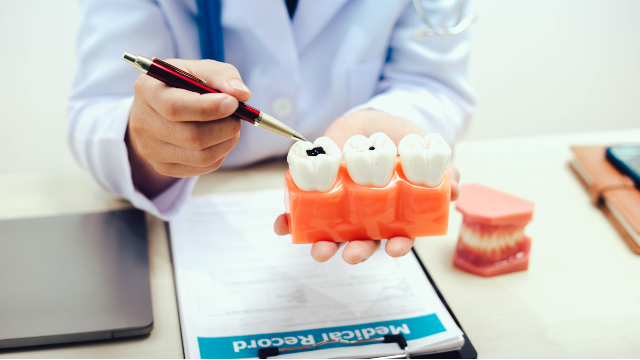
Cavity Treatment Korea: Resin Filling vs Inlay or Crown
A resin restoration is usually enough when decay is small and the tooth's walls and cusps are intact. Larger damage points to an inlay, onlay, or crown.
Learn More
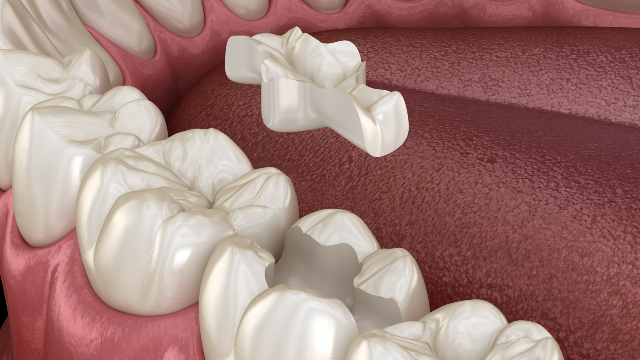
Inlay Onlay Dental Restoration vs Crown: How to Choose
An inlay or onlay restores a damaged tooth without full coverage. Published data show partial-coverage survival close to crowns, so choose by tooth left.
Learn More
Minish Dental Treatment: How It Preserves Tooth Structure
Minish dental treatment is a biomimetic restoration that rebuilds damaged teeth with precision-made blocks while removing as little enamel as possible.
Learn More