Personalized Medical Care & Dedicated International Patient Concierge


Medical Guide
Dental Tourism Korea vs Thailand: A Verification Guide
Dental tourism in Korea vs Thailand: how to tell accreditation from registration, verify a dentist, judge cost drivers, and plan trips and follow-up care.
Schedule a ConsultationDental Tourism in Korea vs Thailand: How to Compare Them
Medically reviewed by Dr. Park Hyo Jin, Specialist in Conservative Dentistry / Director
If you are researching dental tourism in Korea vs Thailand, the choice rarely comes down to distance, because both destinations mean a long flight from the United States. It comes down to what you can confirm before you board: who the dentist actually is, what a clinic's paperwork does and does not certify, how many trips your plan needs, and who is responsible once you are home. Both countries license dentists and regulate dental education. What you need is a method for checking claims, not a ranking of nations.
This article draws on the CDC, the US Department of State, the Dental Council of Thailand, Thailand's hospital accreditation body, and the Korean government's foreign-patient program.
Accreditation and registration are not the same thing
The most useful thing you can learn before comparing dental travel destinations is the difference between an accreditation and a registration. They sound interchangeable in marketing copy and certify different things.
- An accreditation means an organization applied to be assessed against a published standard, and an external body surveyed it and granted a time-limited certificate.
- A registration means an institution entered a list the law requires it to be on. It is a permission, not an assessment of quality.
- A professional license belongs to a person rather than a building, and says that individual may practice.
Thailand is where this distinction genuinely favors the traveler, and that deserves to be said first. Joint Commission International (JCI) publishes a public directory of accredited international organizations that filters by country, and Thailand is represented in it. JCI accreditation is voluntary — an organization chooses to apply, pays for the survey, and can lose the certificate — which is precisely why appearing in that directory is meaningful. You can search it yourself, in English, for either country.
Thailand also runs its own national accreditation system. The Healthcare Accreditation Institute (HAI) is a Thai public organization established by royal decree, whose remit is setting healthcare standards and certifying the quality of hospital services. Its "HA" standards are the domestic benchmark, and they have themselves been certified by the International Society for Quality in Health Care External Evaluation Association, which evaluates accreditation programs against international principles.
Korea's equivalent for foreign patients is a registration system, and describing it accurately matters. The Korean Ministry of Health and Welfare requires medical institutions that attract foreign patients to register, and the program is documented in English through the Medical Korea platform. Attracting foreign patients without that registration is an offense under the Medical Overseas Expansion and Foreign Patients Attraction Act, punishable by imprisonment or a fine. Registered institutions have also been required to carry medical malpractice liability insurance since 2016.
Magok Pureunmaeum Dental Clinic's documented regulatory credential is that registration and nothing beyond it. The clinic is a Registered Medical Institution for Attracting Foreign Patients certified by the Ministry of Health and Welfare in compliance with that Act — a Korean government registration permitting the treatment of foreign patients. It is not a quality rating, not an accreditation, not an endorsement of any outcome, and not equivalent to US board certification. The clinic does not hold JCI accreditation.
Verifying the individual dentist
Institutional paperwork tells you nothing about the person holding the handpiece, so verify the individual separately. This is where the two countries differ most for an English-speaking patient.
Thailand's system is unusually transparent. The Dental Council of Thailand is a juristic person established in 1994 under the country's dental profession act. Its published duties include processing dental registrations, certifying degrees and the academic standing of recognized dental schools, and issuing specialist certificates for recognized specialist boards. It also judges ethics complaints, and its sanctions run from a warning through temporary suspension of a license up to permanent revocation.
The Council operates a public dentist lookup on its website, described as a service for members of the public who want to check whether a particular dentist holds a license. Two limits are worth knowing:
- The search form is Thai-language, and it instructs you to enter the dentist's given name and surname exactly, or the record will not be found.
- It covers licensed, living dentists, so a blank result may mean a spelling problem rather than an unlicensed practitioner.
The Council also publishes a phone number for verification questions, and states that it does not accept complaints through the website.
Korea has licensed dentists and nationally recognized specialty designations, but no comparably simple English-language lookup for an individual practitioner. That is a genuine inconvenience, and the workaround is a documentation request. Ask any Korean clinic, in writing, for the treating dentist's specialty designation, the university that granted the degree, and the hospital where residency training was completed. A clinic that answers with "our experienced dental team" has not answered.
For a sense of what a checkable answer looks like, Magok Pureunmaeum Dental Clinic profiles two named dentists rather than an anonymous roster:
- Dr. Park Hyo Jin is the Director and a Specialist in Conservative Dentistry, with over 22 years of clinical experience.
- Dr. Park Hyo Jin holds a Master's Degree in Dentistry from Wonkwang University Graduate School and completed internship and residency training in Conservative Dentistry.
- Dr. Park Kyung Ran is a Specialist in Oral and Maxillofacial Surgery who graduated from Yonsei University College of Dentistry.
- Dr. Park Kyung Ran completed internship and residency at Yonsei University Dental Hospital's Department of Oral and Maxillofacial Surgery.
One caution applies to both countries. A Korean specialist designation is a Korean qualification and a Thai specialist certificate is a Thai qualification. Neither is US board certification, and neither should be read as its equivalent. The CDC also notes that dentists in destination countries may not be subject to the same licensure oversight as their US counterparts, which is an argument for verifying rather than a judgment about any country.
A hospital system versus a specialist practice
The structural difference most patients actually feel has little to do with quality. It is the kind of organization you walk into.
Thailand's international patient care is strongly associated with large private hospitals. That model brings advantages a small practice cannot match: several specialties under one roof, inpatient capacity, and departments built around foreign patients. If your case might need anesthesia support, hospital-level monitoring, or coordination across medical specialties, that is a legitimate reason to prefer Thailand — and the JCI directory plus HAI give you two independent ways to check the institution.
Korea's dental landscape includes many small, specialist-led practices, and Magok Pureunmaeum Dental Clinic is one of them. What it documents publicly is modest and specific:
- Established in 2017, located in Gangseo-gu, Seoul.
- Staffed by two named dentists, one in conservative dentistry and one in oral and maxillofacial surgery.
- Covers 8 specialty departments and 16 listed services, and explicitly does not provide orthodontics or dentures.
- Cone Beam CT (CBCT) 3D imaging is publicly listed as available, with one unit.
- More than 10,000 procedures reported, stated as Minish and implant procedures combined.
The trade-off is straightforward. A two-dentist practice cannot offer hospital infrastructure; what it can offer is that the specialist who assesses you is the specialist who treats you. Which matters more depends on your case. And if a service you need is missing from a clinic's list — orthodontics and dentures here — no other factor rescues the trip.
The State Department notes that at public hospitals in Thailand, medical staff may speak little or no English. That is a reason to confirm, for any facility in any country, who will interpret during your appointments.
Cost drivers, and the questions that replace a price quote
You will not find a price, a range, or a percentage in this article, in any currency, for any country. That is deliberate. A dental estimate comes from an examination and imaging of your mouth, not from a map. High private dental costs in the United States are a documented reason US patients look abroad, and that is a fair motivation. What you can compare beforehand are the drivers.
Cost drivers that move a dental travel plan more than the destination does:
- The number of teeth involved, and whether neighboring teeth need work once imaging is reviewed.
- Whether a tooth can be preserved or must be replaced — often the largest single fork in the plan.
- Whether bone grafting or a sinus lift is required before an implant can be placed.
- Material choice, diagnostic imaging, sedation, and any laboratory work a restoration requires.
- The number of appointments, the healing gaps between them, and therefore the number of separate trips.
- Flights, lodging, local transport, and unpaid time away from work for each trip.
- The possibility of revision or retreatment later, and who is expected to pay for it.
Transparency questions to send in writing before you commit:
- Can I have an itemized written estimate, listed tooth by tooth and procedure by procedure?
- What is deliberately excluded from that estimate?
- If the in-person examination contradicts the remote consultation, how are the plan and the estimate revised?
- If a restoration fails or must be redone, what is the process, and what would I be charged?
- What payment methods do you accept, and when is payment due?
That last question is not filler. The State Department's Thailand information page notes that hospitals and doctors there require payment upfront before service or admission, and that credit card payment is not always available. Those are logistics rather than prices, and they change how you carry funds. The CDC adds a caution for every destination: understand exactly which services are included in the cost of a procedure, because some facilities abroad charge separately for follow-up care.
Magok Pureunmaeum Dental Clinic has not published pricing, and this article estimates none. Its stated position is that costs and treatment plans are determined after an in-person examination. If you want a written plan to compare, the online consultation and contact page is the documented route for reaching it.
Travel time, trips, and flying afterward
Travel time separates these two destinations far less than most comparison articles admit. Both are long-haul from the United States, and both usually mean a connection. Rather than quote flight hours that vary by origin and season, compare the two things that shape your calendar: how many trips the plan requires, and how soon after the final appointment you can fly.
For Seoul, the geography is documented. US patients typically fly into Incheon International Airport (ICN) or Gimpo International Airport (GMP). Magok Pureunmaeum Dental Clinic is on the third floor of Woosung SB Tower at 385 Gangseo-ro, Gangseo-gu, Seoul, about 50 meters from Exit 2 of Balsan Station on Seoul Metro Line 5. Published hours are Monday and Wednesday through Friday, 9:30 AM to 6:30 PM KST; Tuesday until 8:30 PM KST; and Saturday 9:30 AM to 2:00 PM KST, closed Sundays and public holidays. Those hours decide how many appointments fit into a week.
Entry requirements are the one area where you should trust a primary source over any clinic, agency, or article, including this one.
- For Thailand, the State Department's country information page covers passport validity, when a visa is required for longer stays, and pre-arrival online registration.
- For South Korea, the same series covers passport and visa requirements and the current status of the Korea Electronic Travel Authorization (K-ETA), whose exemption for US passport holders is time-limited and has been extended more than once.
- Treat any secondhand summary of either country's rules as potentially out of date until you check it against the government page.
Then there is the return flight, which is part of the treatment plan whether anyone frames it that way or not. The CDC advises medical tourists that travel soon after a procedure carries its own risks, and that ordinary vacation activity during recovery can interfere with healing. Ask how many days should separate your final appointment from your flight home. Healing varies between people and procedures, so treat any interval as an estimate.
Infection control: what you can check, and what you cannot
Sterilization is the concern US patients raise most often about dental care abroad, and the hardest to verify from another continent. Stop asking whether a clinic is "clean" and start asking about named practices.
The CDC publishes a summary of infection prevention for dental settings built around Standard Precautions — the minimum practices that apply to all patient care, regardless of a patient's known infection status. Its core elements give you a question list:
- Hand hygiene practices, and when they are performed.
- Personal protective equipment, including gloves, masks, and eye protection.
- Sharps safety, covering both equipment design and work practices.
- Safe injection practices, meaning aseptic technique for injected medications.
- How reusable instruments are cleaned, packaged, sterilized, monitored, and documented.
CDC also publishes an infection prevention checklist for dental settings. Send those items to any clinic in Bangkok or Seoul and compare the answers. Two caveats: a clinic's written answer is a claim rather than independent verification, and an accreditation certificate is not a guarantee about your result.
Magok Pureunmaeum Dental Clinic's detailed sterilization and infection-control protocols are not publicly verified, so this article does not describe them. What is documented is different in kind: its strongest recorded quality differentiator is specialist-led diagnosis and treatment planning by a conservative dentistry specialist trained in a university dental hospital. Ask about sterilization directly, and expect specifics.
Continuity of care after you fly home
Everything above can be checked before departure. Continuity of care only becomes real afterward, and it is the weakest link in dental travel to any country, at any distance. The CDC's recommendations turn neatly into a checklist:
- Discuss your plan for handling complications with both your US clinician and the clinician treating you abroad.
- Check what, if anything, your domestic health coverage pays for outside the United States.
- Ask whether follow-up care is scheduled at the facility that performed the procedure.
- Request copies of your records, in English, before you leave.
- Understand that if complications develop, you may not have the same legal recourse as at home.
Then ask every clinic you shortlist, in both countries: who do I contact if something feels wrong in six weeks, in what language, during whose business hours, and is there a charge? A hospital with an international patient department and a small practice may both answer well, or neither may.
For this clinic, aftercare and emergency support arrangements for international patients are not published, so this article will not describe, promise, or imply them. Ask directly. The clinic does state that there are no language limitations and that multilingual support is available for all patient services, while interpreter arrangements are determined after consultation — itself a question to raise early. It also maintains a patient reviews page; weigh any clinic's reviews well below the verifications above.
Side-by-side: what to check, and where
| What to check | South Korea | Thailand |
|---|---|---|
| Regulator for individual dentists | Licensed under Korean law, with nationally recognized specialty designations | Dental Council of Thailand, established 1994 under the dental profession act |
| Public lookup for one dentist | No comparably simple English lookup; request credentials in writing | Council operates a public license lookup, Thai-language, exact name required |
| Foreign-patient program | Ministry of Health and Welfare registration, documented in English | Ask which authorization the facility holds and how to confirm it |
| Voluntary hospital accreditation | Ask whether the institution holds any, and from which body | National HA standards via HAI; JCI directory also searchable |
| Typical setting for foreign patients | Includes many small specialist-led clinics | Strongly associated with large private hospitals |
| Getting there from the US | Long-haul flight; Seoul served by ICN and GMP | Long-haul flight; comparable travel commitment |
When Thailand is likely the better choice
There are cases where the other destination is the right answer.
- Your plan may need hospital infrastructure, inpatient capacity, or anesthesia support beyond what a dental clinic provides.
- Your case crosses into other medical specialties and you want them coordinated in one institution.
- You want a public, first-party license lookup for the individual dentist, and can obtain the name in Thai script to use it.
- You were already traveling in Southeast Asia and the work fits a trip you were making anyway.
When Korea may suit your case better
- Your central question is whether a tooth can be preserved rather than replaced, and you want a conservative dentistry specialist to assess it.
- You prefer a named specialist who both diagnoses and treats you, over a larger rotating team.
- You want government-published, English-language confirmation that a clinic is registered to treat foreign patients.
- Your plan is restorative or endodontic rather than medically complex, so hospital infrastructure is not decisive.
If neither list fits, the problem may be the timing rather than the country. A staged plan you cannot return for is not a good deal at any distance.
The Bottom Line
- Learn the vocabulary first: an accreditation is an assessment against a published standard, a registration is a legal permission, and a license belongs to a person. Conflating them is the most common error in dental travel marketing.
- Thailand's genuine advantages are a documented dental regulator with a first-party license lookup, a national hospital accreditation body, and representation in a voluntary international accreditation directory searchable in English.
- Magok Pureunmaeum Dental Clinic holds a Korean Ministry of Health and Welfare registration as a Registered Medical Institution for Attracting Foreign Patients — a government registration, not an accreditation or quality rating — and does not hold JCI accreditation.
- Travel time barely separates these destinations; the number of trips your plan requires and the wait before flying home matter far more.
- No article can price your case. Compare cost drivers, demand an itemized written estimate, and get the follow-up plan in writing before booking.
Frequently Asked Questions
Does JCI accreditation mean a clinic is better than one without it?
It means the organization volunteered to be assessed against a published standard and holds a time-limited certificate, which is useful information. It does not guarantee your outcome, and its absence does not indicate poor care, because accreditation is voluntary and many capable practices never apply. Treat the directory as one input alongside the dentist's credentials and the clinic's written answers on sterilization and follow-up.
Is Magok Pureunmaeum Dental Clinic internationally accredited?
No. Its documented regulatory credential is a Korean Ministry of Health and Welfare registration as a Registered Medical Institution for Attracting Foreign Patients under the Medical Overseas Expansion and Foreign Patients Attraction Act. That registration permits the treatment of foreign patients; it is not an accreditation, a quality rating, or an equivalent of US board certification. The clinic does not hold Joint Commission International accreditation.
How do I check whether a Thai dentist is licensed?
The Dental Council of Thailand operates a public lookup on its website for people who want to confirm that a dentist holds a license to practice. The form is in Thai and requires the given name and surname entered exactly, so ask the clinic for the name in Thai script first. If the search returns nothing, call the Council using the number on that page rather than assuming the worst, since spelling is a common cause of a blank result.
Which destination has a shorter flight from the United States?
Neither offers a meaningful advantage here, which is why travel time is a poor way to choose between them. Both are long-haul from every US region and typically involve a connection, so the number of separate trips your treatment plan requires will affect your time and budget far more than the routing. Ask each clinic how many appointments the plan needs and how many days must separate them.
What should I ask about sterilization before booking?
Ask about named practices rather than general cleanliness. The CDC's summary of infection prevention for dental settings is organized around Standard Precautions — hand hygiene, personal protective equipment, respiratory hygiene, sharps safety, and safe injection practices — plus how reusable instruments are cleaned, sterilized, monitored, and documented. Send that list to every clinic on your shortlist, and remember that a written answer is a claim rather than independent verification.
Do I need a visa to visit either country for dental treatment?
Confirm current requirements on the US State Department's country information page for your destination before buying a ticket, because both countries' rules have been in flux. The Thailand page addresses passport validity, visas for longer stays, and pre-arrival online registration. The South Korea page addresses the status of the Korea Electronic Travel Authorization, whose exemption for US passport holders is time-limited.
This article is for general informational purposes and does not constitute individualized medical advice, and it is not a self-diagnosis tool. Treatment candidacy, technique, and expected outcomes can only be determined through a consultation with a qualified dentist.
More Articles
Continue reading our clinical guides.
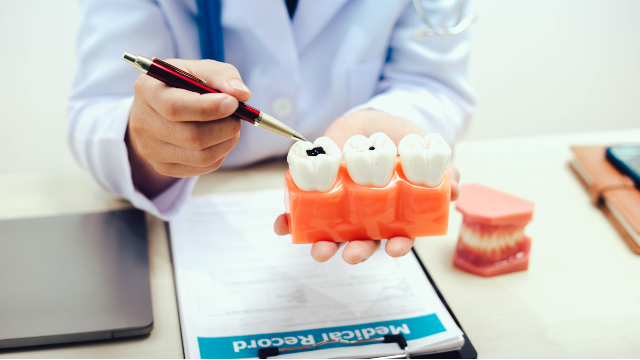
Cavity Treatment Korea: Resin Filling vs Inlay or Crown
A resin restoration is usually enough when decay is small and the tooth's walls and cusps are intact. Larger damage points to an inlay, onlay, or crown.
Learn More
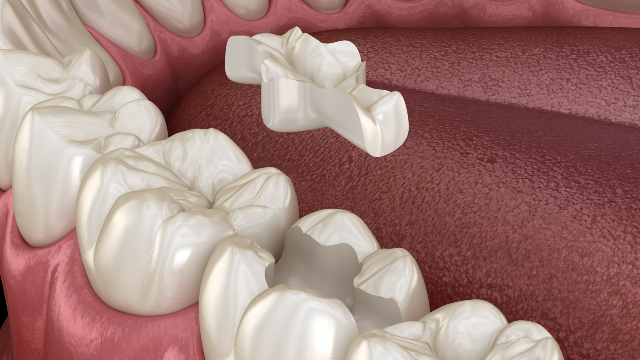
Inlay Onlay Dental Restoration vs Crown: How to Choose
An inlay or onlay restores a damaged tooth without full coverage. Published data show partial-coverage survival close to crowns, so choose by tooth left.
Learn More
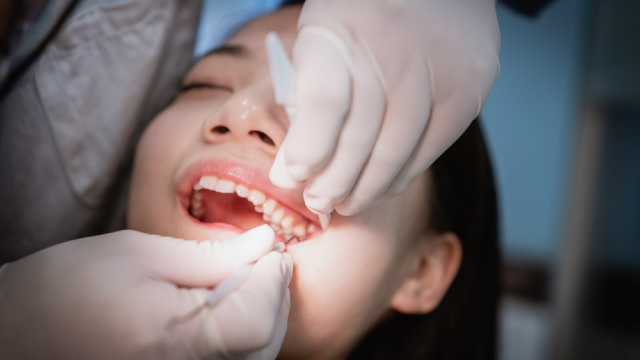
Minish Dental Treatment: How It Preserves Tooth Structure
Minish dental treatment is a biomimetic restoration that rebuilds damaged teeth with precision-made blocks while removing as little enamel as possible.
Learn More